
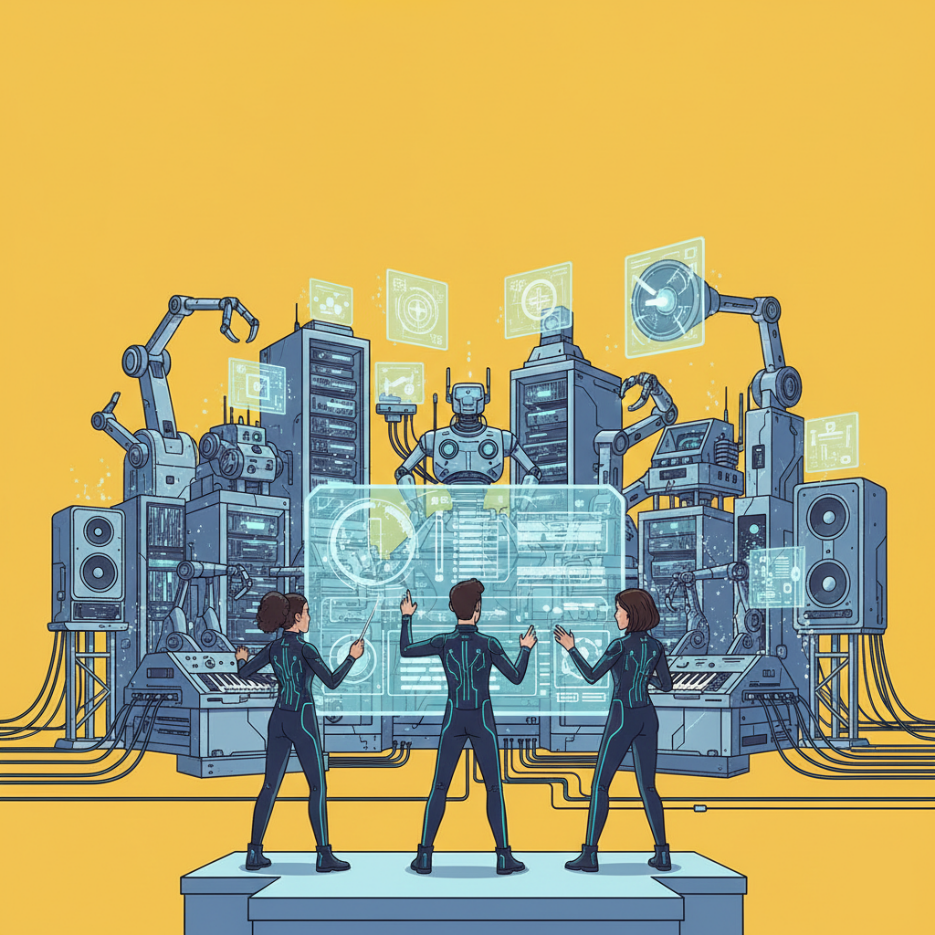

Creativity was once a human trait, but it is now becoming common in machines. This article uncovers the issues in AI-generated artistic work.
AI is not just restricted to answering questions, automating tasks, or generating codes, it is also doing creative work. This includes, but is not limited to, pictures, videos, artwork, or music. Is this artificial creativity really a creative work? In 1843, Lady Ada Lovelace – the World’s First Computer Programmer – argued that machines one day could think like a human if they intentionally programmed to do like humans. She further argues that a machine will be truly creative or intelligent if it is able to produce original ideas. These ideas of Lovelace also unfolded the definition of creativity, which must include two components: (1) a valuable, and (2) an original idea.
In 2001, researchers created a LoveLace Test to separate creative ideas from non-creative ones. This test is especially designed for machines that claim to be creative like humans. The test identifies whether a machine can generate a result that cannot be explained by its source code. The Lovelace test is more like many of Einstein’s thought experiments rather than an objective scientific test.
Suno AI :
The idea that a machine could produce original art was theorized in the last decade. In 2016, Dream Theatre – a critically acclaimed progressive metal band – in their album “The Astonishing” wrote that one day machines would produce music. Because of the technology limitation at that time, the idea seemed impossible and science fiction, until recently, generative AI has started to make music. For example, Suno AI is trained on a very large dataset of existing music utilizing deep learning. This training uncovers patterns, styles, genres, and structures of both past and recent music. When a user promoted Suno to make a certain type of music, the AI looks at the massive music dataset to create new music.
But the question is, does Suno create original music? Music or art producing AI uses a complex algorithm to develop outcomes. Music-producing AI, like Suno, is able to differentiate which melodies humans consider beautiful and which are not worth listening to using deep learning techniques. These comprise hybrid models, including transformers (that predict notes, lyrics, and structure) and generative adversarial model (that refines audio to produce a high-quality outcome). This prevents Suno from copying tracks from the dataset; instead, it creates new music. While often Suno produces original compositions, the outputs sometimes shared similarities of other songs due to shared patterns. Thus, there is no guarantee that the music is unique. That means Suno may or may not pass the Lovelace test.

Evolutionary Algorithms :
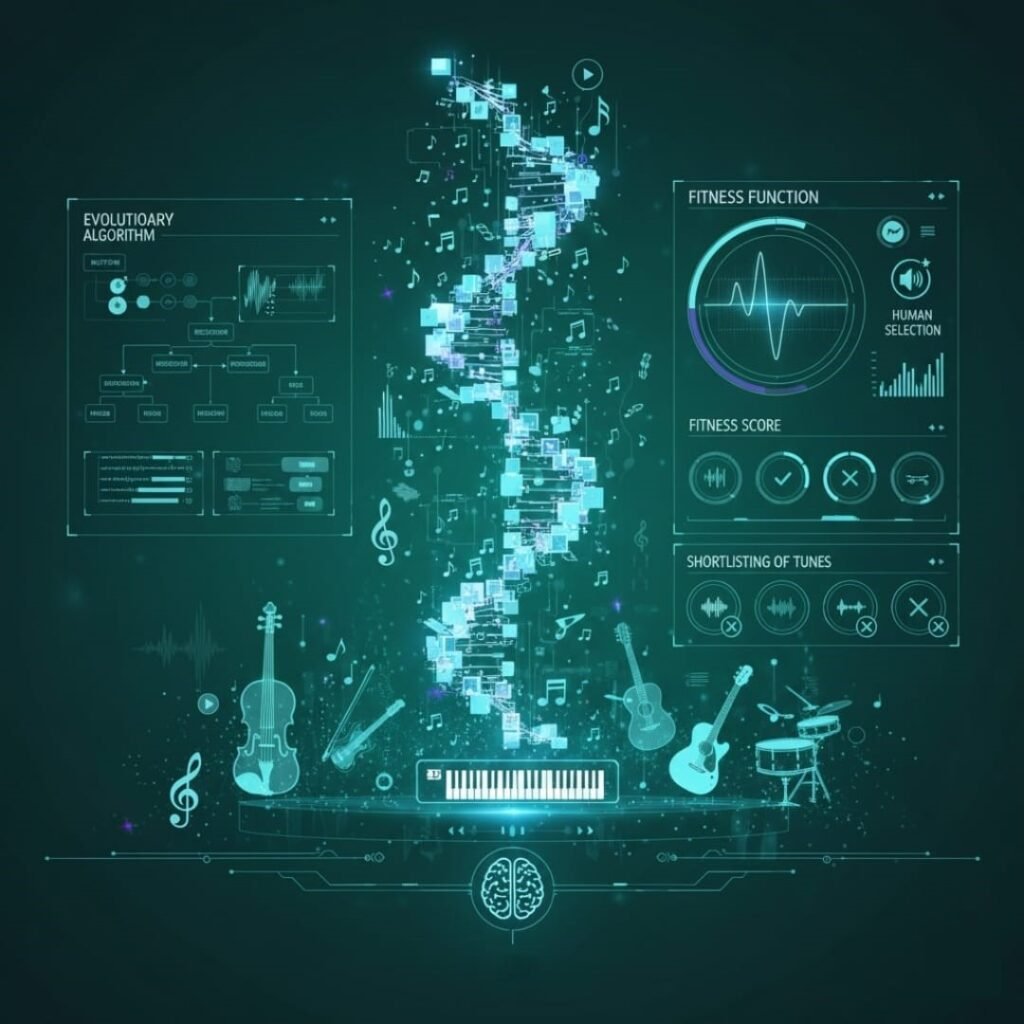
To produce unique and valuable music, researchers argue that machines could build on evolutionary algorithms. To build a machine based on such an algorithm, it must begin with initial musical phrases along with a rudimentary algorithm that imitates reproduction and random mutations by swapping a few parts, merging others, and changing random notes. With this, the machine is able to generate new phrases and use a “fitness function”. Like biological fitness that can be determined through external environmental pressures, the fitness function in the music algorithm can be identified using an external melody selected by real musicians or music listeners that represent attractive melody. The algorithm can use initial phrases and external melodies to choose similar phrases. It can also discard the least similar sequences and apply mutation and recombination to the remaining phrases, and choose the closest phrases to the initial ones and external melodies, the process repeated until the final outcome is achieved, prompted by the user. This process is complex and random that it can pass the Lovelace test. The inclusion of human input could allow to produce beautiful melodies.
However, the satisfaction of our intuition about something called actually creative is yet to be done. Even though AI can produce beautiful and often original melodies, there is limited intention and awareness involved in this process. This is because the music may be created by the programmers through a process they don’t even understand.
Legal Issues and Job Loss :
Copyright of AI-produced creative work is also a problem, notably when the outcome is 100% AI and does not include any human effort. This type of outcome cannot be copyrighted in the US because the law requires human authorship. If an artist has lyrics and some composition, they can make music using AI but the output cannot be copyright or free from legal issues.
Another issue is loss of jobs for artists. For example, This is Music, a UK-based research report surveyed 1,300 musicians (artists, performers, writers, and producers) identified that 66% sample considered AI a threat to their jobs while only 13% disagree. Notably, songwriters and composers could face existential risk and their royalties and opportunities likely affected. While actual job loss or displacement has not been reported, Office of National Statistics reported that 34.49% of artists are at risk of job loss due to automation.
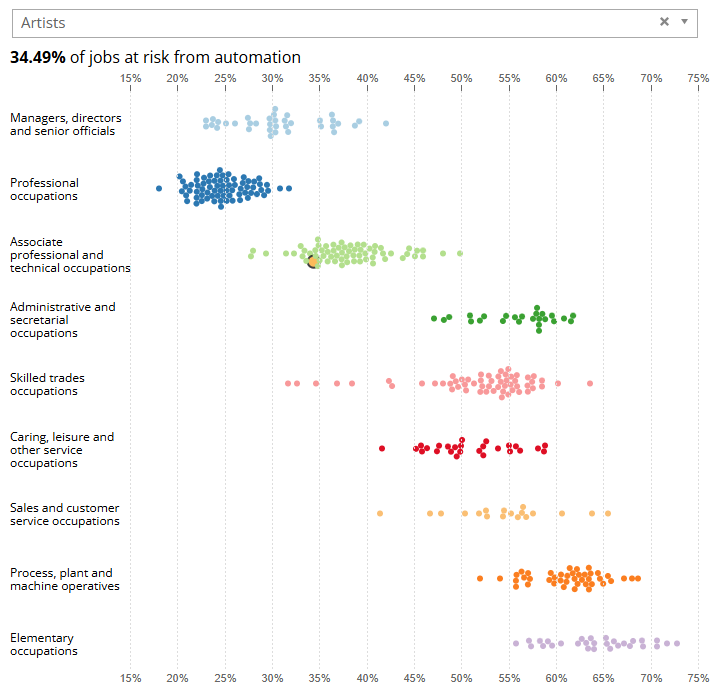
Artists fall under associate professional and technical occupations
So how artificial creativity differs from human creativity? Does human creativity emerges from interconnected neurons formed by biological algorithms along with the random experiences of one’s life? Whatever creativity is, disorder and order is behind artificial creativity producing music, pictures, videos, and lyrics are just a few to name. Calling these outcomes as creative or not would be confusing, but if music makes you cry, blush, or shiver, does it matter who created it? The answer is “yes” because the production of AI-generated music affects real artists and producers in terms of job loss.