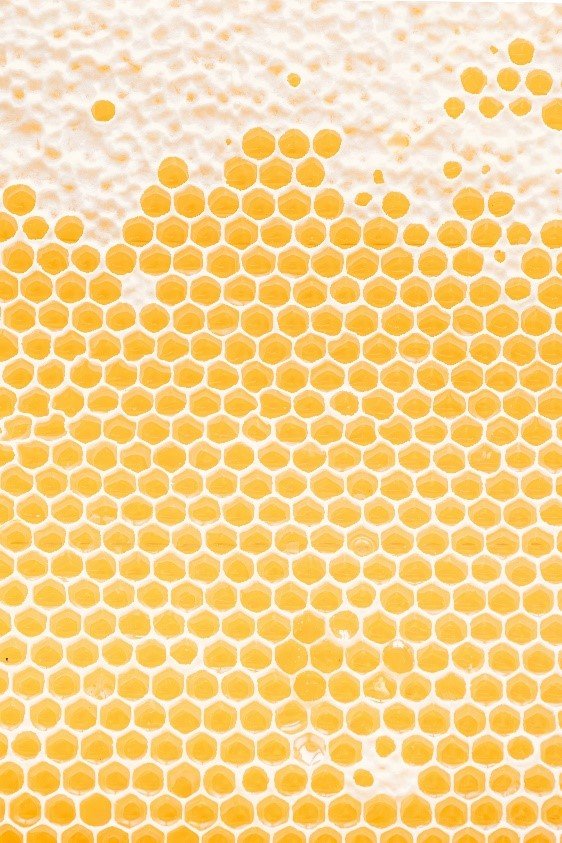

The Closer You Look, the More Complexity Increases
Honeycomb is no doubt a marvel. Its perfection is in the details and the details are impeccable indeed. Honeybees are a masterpiece of nature. They are stunning due to their work ethic, the honey they produce, and their complex social structure. Another truth about honeybees is that they are brilliant mathematicians and architects. Von Frisch argues that bees can determine angles. However, a specific mathematical speciality of the bee exists in the closest thing to them: the hive. Like all other beings, bees have basic needs – food and shelter to exist. The hive is not just a home for honeybees but a storage place for their honey. Since the hive is extremely important for their survival, the hive’s architecture is beyond human thinking. If you have ever encountered a honeycomb, you will notice that it has a tightly packed hexagonal design. But the question is, why did honeybees make a hexagonal design? To understand this, you need to think of certain factors, including a secure place where they can store nectar until it converts into honey. This highlights the need of an efficient space like storage cells. Each cell must be big enough to house a honeybee and her