



We know a lot about magnesium but there are three ways you can know through this article to get magnesium
The big mistake most people are making regarding magnesium, your blood levels show normal magnesium levels. What a lot of people don’t know is only 1% of all your magnesium in your body is inside your blood, 99% is deep in your cells. When your body is deficient in magnesium, it will rob magnesium from your bone, your muscle, and put it in the blood, giving you the illusion that you have enough magnesium if you’re just relying on the blood test.
There are more sophisticated, advanced ways to determine if you’re magnesium deficient, but there are simple way to figure it out. If you have any muscle spasms in your body, muscle twitch underneath the eyelid, anxiety, Charley horses, and definitely poor sleep are all clues that you’re deficient in magnesium.
Foods that Provide Magnesium :
Typically, with the diet, you need about 400 milligrams of magnesium every single day for men and 320 milligrams for women. Almonds are high in magnesium or you can get your magnesium from spinach. What about chocolate? Isn’t that high in magnesium? It’s sort of high, but you would still need about 9 servings or 252 pieces of dark chocolate to get your daily amount of magnesium.
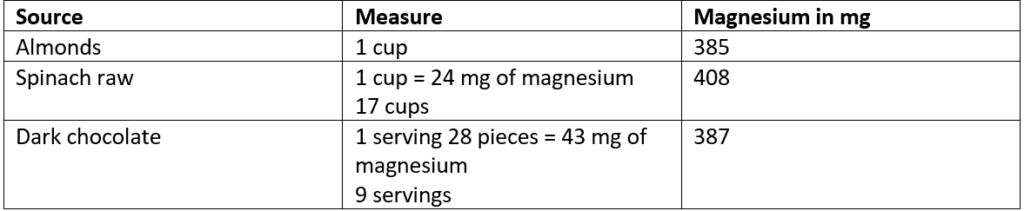
Source: National Agriculture Library

On top of that, there are many things that don’t allow us to absorb even the magnesium from the food that you eat. For example, if you have inflammation in the gut, that’s going to greatly reduce your absorption.
Grains in your diet, refined foods like refined sugar, starches depletes your magnesium. Other things will deplete your magnesium like alcohol and caffeine. Of course, the top selling magnesium products are not the best ones to take because not only do they create diarrhea because they’re a laxative, but you really don’t absorb much. Like with magnesium oxide, you only absorb like 3 to 4%. Magnesium glycinate absorbs better than citrate and oxide and it doesn’t create a laxative effect and the glycinate part of it will help you sleep.
Benefits of Magnesium :
Magnesium is one of the regulators of calcium. You see, calcium has other purposes other than just making your bones strong. Calcium is also used in the body as the main communication signal between cells. Far too often we accumulate too much calcium inside the cell. If there’s too much calcium in the cell, those calcium crystals start damaging certain parts of the cell.
We calcify as we get older and you may have heard of the vitamin K2 being the antidote for that because vitamin K2 helps to keep the calcium from accumulating in the arteries. But magnesium is even more important in helping to regulate excess amounts of calcium.
Another thing that magnesium is really good at is preventing kidney stones. Additionally, the calcium causes muscle to contract and magnesium to relax, so anytime you have a tight muscle that means you have way too much calcium, but low magnesium. Magnesium also prevents heart attacks along with any type of problem with the rhythm of the heart. It corrects atrial fibrillation, but sometimes it might take months before you really correct that deficiency. Likewise, you can’t correct a very severe deficiency of magnesium by just taking the maintenance dose. Sometimes you have to increase it to 1,000 to 1,500 or more milligrams every single day over a period of months.
Regular Sources that Affect Magnesium Intake :
Now let’s get to the three secrets. Number one is we used to get a lot of our magnesium from hard water. Whether it’s from a spring, or a well. We decided to filter the water like in city water, or send the water through a water softener, which actually removes the calcium and magnesium and replaces with sodium and potassium to make the water less corrosive on the piping and less harsh in washing your clothes. People don’t consume hard water anymore. In areas where people don’t soften the water, they have much less risk of getting heart attacks. If you compare that with areas that do use a lot of water softeners, the risk of heart attacks go up.

Secret number two, vitamin D won’t work without magnesium. If you’re increasing your magnesium, also increase your vitamin D and that way they will both work. Just as one side note, vitamin B1, which is really important in reducing stress and gets depleted when you consume a lot of carbohydrates that also is dependent on magnesium. When you take more B1, you need magnesium to allow that to work.
The last and most important secret, magnesium has a super important role in some of your biochemistry. Deep in the cell, you have all sorts of motors that do the work of the cell, like the one in the mitochondria that spins 200 to 400 times a second. Your energy levels, your fatigue is related to how much magnesium you save. Magnesium helps lower cortisol, helps you sleep, but it also gives you energy. If you have any type of fatigue, it could be because you’re deficient in magnesium.